


Key Takeaways
- 15% Productivity Boost: Research indicates that curated music increases workplace efficiency by regulating dopamine and suppressing cortisol.
- Neurowellness at Work: Music acts as a biological buffer against stress, supporting mental clarity in high-pressure environments.
- Maintaining “Flow State”: Professional background music for offices masks acoustic distractions and uses instrumental tracks to minimize cognitive load.
- Seamless Compliance: Utilizing a dedicated platform like Jukeboxy ensures 100% legal compliance and eliminates “Aux Cord Wars” among staff.
How Music Shapes the Energy of the Workday
The atmosphere employees work in directly affects how they feel and perform. Music acts as a The modern work environment is a complex ecosystem of energy. Music acts as a regulator, helping to set a consistent pace throughout the day, especially in environments where energy naturally fluctuates.
- The Focus Period: Calmer, minimalist selections support deep work by masking distracting office chatter and digital pings.
- The Morning Launch: Upbeat, “organic” sounds help jumpstart alertness without the jarring effect of loud noise.
- The Mid-Day Momentum: Steady, rhythmic tracks (like Lo-Fi or modern Jazz) help employees power through the “post-lunch slump.”
Pro-Tip: If you’re managing a larger facility, check out our comprehensive guide on Music for Office Buildings to see how to create a positive workplace atmosphere across multiple floors or common areas.
The Strategy Behind Background Music for Offices
In 2026, the demand for high-quality background music for offices has shifted from “generic elevator music” to intentional, science-backed soundscapes. A professional office soundtrack serves two primary functions:
- Acoustic Privacy: In open-plan offices, background music provides a “sound mask” that prevents private conversations from becoming distractions for the rest of the team.
- Brand Identity: The music your employees hear is a reflection of your company culture. A tech firm might lean into synth-heavy lo-fi, while a law firm might prefer modern classical or soft jazz to signal sophistication and calm.
By utilizing a dedicated platform for office music, businesses can automate these vibes, ensuring the energy in the room always matches the task at hand.

The Science of Focus: Managing Cognitive Load
Not all music is created equal when it comes to “Deep Work.” The relationship between music and focus depends heavily on Cognitive Load, the amount of information your working memory can process at once.
Why Instrumental Beats Win
In roles requiring high concentration, such as coding, writing, or data analysis, lyrical music can actually decrease productivity. The brain’s language center tries to process the lyrics and the task simultaneously. In 2026, “Focus Playlists” have shifted toward:
- Ambient Electronic: Consistent rhythms that provide a “sonic cocoon.”
- Acoustic Minimalism: Natural instruments that provide a sense of groundedness.
- Biophilic Soundscapes: Incorporating natural elements (rain, wind) to reduce the “sterile” feeling of modern offices.
Elevating Employee Morale and Neurowellness
Music is a direct line to the human nervous system. In 2026, high-performing teams use music as a biological tool to maintain emotional balance and mental clarity.
The Neurochemistry of a Productive Shift

Listening to music you enjoy triggers the release of dopamine and serotonin, the brain’s natural “feel-good” chemicals. This isn’t just about happiness; it’s about biological momentum.
- Stress Reduction: Music helps suppress cortisol (the stress hormone), reducing the physical “edginess” employees feel during peak hours or difficult customer interactions.
- The Iso-Principle: In 2026, many businesses use the “Iso-Principle” to manage team energy. This involves starting with music that matches the team’s current mood and gradually shifting the tempo to lead them toward a more energized or calm state.
- Perceived Time: A well-curated soundtrack can actually alter the perception of time. For employees performing repetitive tasks, a steady, engaging rhythm makes long shifts feel significantly shorter and more rewarding.
Why Structured Music Matters for Teams
Allowing individual employees to control the music often leads to friction. Personal preferences vary, and one person’s “focus music” is often another’s distraction.
Business-focused platforms like Jukeboxy remove this friction by offering:
- Consistency: The music stays on-brand and at a professional volume.
- Compliance: You avoid the legal risks of using personal streaming accounts for public performance, and understanding why music licensing matters is the first step in protecting your business from heavy copyright fines.
- Inclusivity: Curated playlists are “family-friendly” and professional, creating a shared environment that feels fair for everyone.
A Smarter Soundtrack for 2026
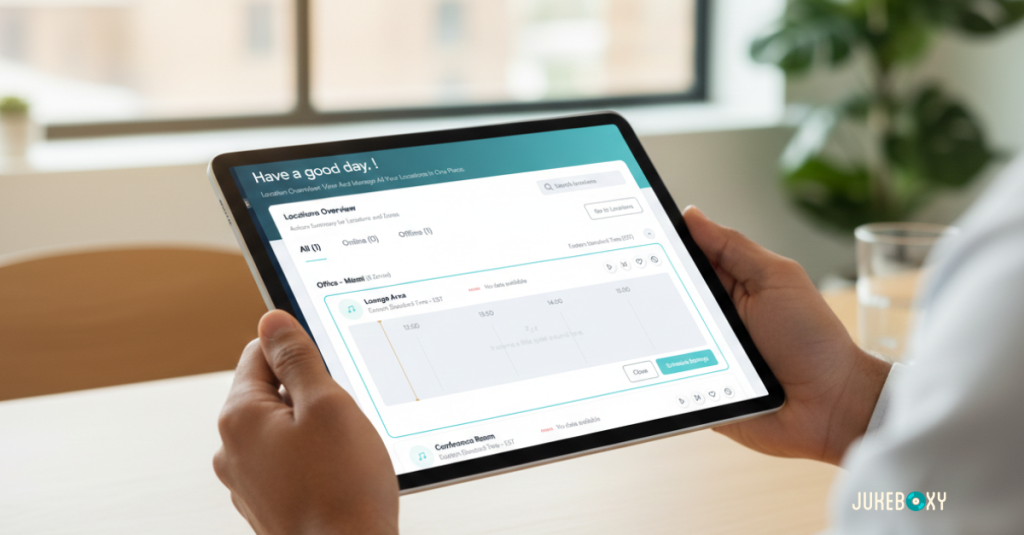
Businesses are no longer looking for “just music”; they are looking for a strategic asset. Solutions like Jukeboxy allow managers to support their teams’ mental health, maintain focus, and stay legally compliant, all from a single dashboard.
Frequently Asked Questions
1. Does music actually increase employee productivity?
Yes. Research indicates that curated music can improve performance on repetitive tasks and enhance overall mood. In 2026, businesses use science-backed soundtracks to help employees enter a “flow state,” providing a rhythmic “momentum” that makes the workday feel more balanced and engaging.
2. What is the best type of background music for offices?
The best background music for offices depends on the task at hand. For high-concentration work (like coding or writing), instrumental genres like Lo-Fi, ambient electronic, or classical are superior because they lack distracting lyrics. For open-plan offices or collaborative spaces, upbeat acoustic or soft jazz can help mask distracting background noise and maintain energy.
3. How does music help with workplace stress?
Music acts as a biological buffer against stress by lowering cortisol (the stress hormone) and heart rates. By creating a stable, pleasant acoustic environment, a professional office soundtrack supports “neurowellness,” helping employees stay calm and focused even during high-pressure deadlines.
4. Is it legal to use a personal streaming account for office music?
No. Personal accounts (like Spotify or Apple Music) are licensed only for private, non-commercial use. Playing them in an office is legally considered a “public performance.” To avoid significant copyright fines, businesses must use a commercial-grade service like Jukeboxy, which includes all necessary licensing for the workplace.
Ready to boost your team’s focus?
Stop the “Aux Cord Wars” and start building a high-performance office environment today. Get 14 days of fully licensed, science-backed background music, absolutely free.
Start Your 14-Day Free Trial – No Credit Card Required
Sources & Further Reading:
- Godkin, M. “Can Music Help You Study and Focus?” National University, 2026.
- Purdue University. “Is Music at Work Helping or Hurting?” Purdue Business News, 2025.
- U.S. Copyright Office. “The Music Modernization Act.” Copyright.gov, 2026.
- NIH. “Music-based interventions at workplaces.” PubMed Central, 2025.
